> For the complete documentation index, see [llms.txt](https://knowledgebase.qommentary.com/llms.txt). Markdown versions of documentation pages are available by appending `.md` to page URLs; this page is available as [Markdown](https://knowledgebase.qommentary.com/qommentary-writeback/defining-a-primary-key.md).
# Defining a primary key
A primary key dimension is a field which contains keys unique for each record. When you add dimensions to your Qommentary Writeback table, you will need to select one dimension to be used as the **primary key**.
To select a dimension to be used as a primary key, please follow these steps:
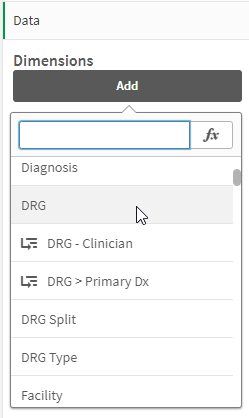
1\. Add a dimension to your table
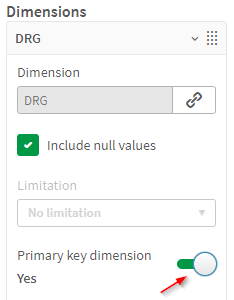
2\. Expand the dimension's properties\
3\. Click on the switch control to select dimension as **Primary key dimension**
{% hint style="warning" %}
Be aware of any additional dimensions added which could split the primary key dimension forcing it to display duplicated values - thus breaking the primary key purpose.
In that case, consider creating a **composite key**.
{% endhint %}
### Using a single dimension
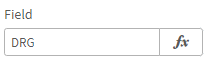
When the dimension chosen to act as a primary key displays unique records in the table, then selecting a single dimension is sufficient.
Example:\
 ### Using a composite dimension
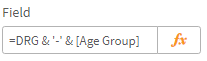
When a single dimension cannot produce unique records, then a composite dimension must be created.
Example:\
### Using a composite dimension
When a single dimension cannot produce unique records, then a composite dimension must be created.
Example:\
 {% hint style="info" %}
You may hide the column if you do not wish to display it in your table.
{% endhint %}
{% hint style="info" %}
You may hide the column if you do not wish to display it in your table.
{% endhint %}